The 1st International Workshop on
User Interface and Experience for Software Engineering
Co-Located with ICSE 2026, Rio De Janeiro, Brazil
About
User interfaces (UIs) and user experiences (UX) form the foundation of how people interact with modern software systems. With the proliferation of mobile, web, desktop, and multi-modal platforms, designing, implementing, testing, and evolving UIs has become central to modern software engineering. Beyond visual layout and interaction patterns, UI development today spans accessibility, personalization, automation, and seamless integration with backend logic and services. As AI technologies, such as large language models (LLMs), vision-language systems, and intelligent agents, increasingly support or automate UI interactions, a new wave of opportunities and challenges emerges at the intersection of UI/UX and software engineering.
This workshop aims to build a community around UI/UX engineering as a rigorous multidisciplinary research agenda within software engineering. It will highlight the unique challenges of engineering user interfaces, especially in the context of intelligent systems, cross-platform apps, accessibility compliance, and human-centric requirements. Through this forum, we hope to inspire new methodologies, tools, and benchmarks that reflect the evolving nature of UI and its growing impact on software quality, reliability, and user experience.
The primary objectives of this workshop are to:
- Share cutting-edge research and practices in user interface engineering, including designing, developing, testing, repair, evolution, accessibility, and AI-driven interaction.
- Facilitate discussions among researchers and practitioners from diverse fields, including software engineering, HCI, AI, and design communities to address UI/UX challenges with both technical rigor and user-centered focus.
- Shape the research roadmap for UI/UX engineering by identifying foundational questions, bridging gaps in current techniques, and inspiring actionable future directions.
Call for Papers
Submission Link: https://icse2026-uise.hotcrp.com
All papers will be submitted via HotCRP and be reviewed in single-anonymous. All submissions must be in English and in PDF format. Detailed submission policies and guidelines for UISE 2026 are in line with the ICSE research track Submission Process (https://conf.researchr.org/track/icse-2026/icse-2026-research-track#submission-process). At least one author of each accepted paper should register for the workshop and present the paper in the workshop.
Note: As per the new ACM policies for open-access publishing, extended abstracts will be free of Article Processing Charges (APCs).
Full Research or Experience Papers
Submission: We invite authors to submit papers (8-page including references) on novel approaches, tools, datasets, or studies.
Short Research or Experience Papers
Submission: We invite authors to submit papers (4-page including references) on novel ideas and positions that have yet to be fully developed.
Extended Abstracts
In addition to regular papers, we also invite extended abstracts (Up to 5-page including references) on position papers, early ideas, or reflections on practical challenges or lessons learned in UI/UX engineering. We see this as an opportunity for authors to promote their work to an interested audience to gather valuable feedback.
Note: Extended abstracts will be proceedings free of Article Processing Charges (APCs).
The topics of this workshop include but are not limited to:
- AI-Enhanced UI/UX in Software Engineering
- UI generation, repair, or transformation
- Intelligent GUI testing
- Agents for GUI automation
- Usability evaluation
- Personalization and accessibility
- Human-in-the-loop UI adaptation and co-design with AI
- UI/UX-Centric Software Engineering
- Methods for UI code analysis, maintenance, and evolution
- Cross-platform UI consistency checking and testing
- UI-driven software testing and test case generation
- Engineering practices for accessibility (A11y)
- UI/UX requirements engineering
- Benchmarks, Tooling, and Methodologies
- UI/UX datasets for learning, testing, or empirical study
- UI/UX metrics for evaluation
- Cross-platform or cross-device frameworks
- Benchmarks and evaluation for UI/UX engineering
- Open-source tools supporting UI/UX in SE workflows
- Emerging Themes and Interdisciplinary Work
- Multimodal or immersive UI systems (e.g., AR/VR, voice/UI hybrids, avionics, etc.)
- Privacy, trust, and ethics in adaptive or personalized UIs
- Integration of HCI and SE methods for UI/UX research
Important Dates (23:59 AoE time)
| Paper Submission Deadline | October 31, 2025 |
| Notification to Authors | December 1, 2025 |
| Camera-Ready Deadline | January 26, 2026 |
| Workshop Date | April 14, 2026 |
Workshop Schedule
| # | Time | Talk |
|---|---|---|
| 1 | 9:00 - 9:10 | Welcome and Opening Remarks (Sidong Feng) |
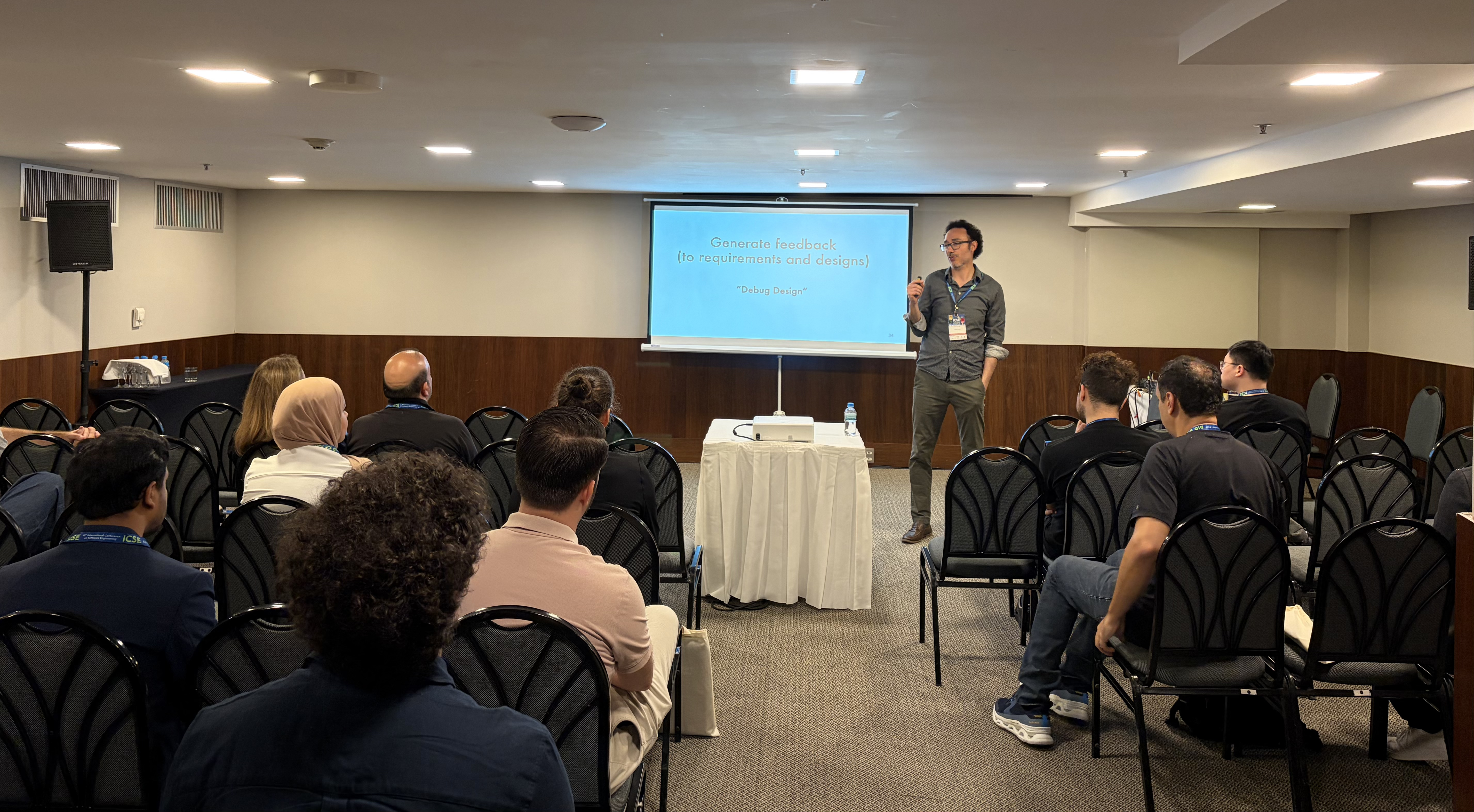
| 2 | 9:10 - 10:00 | Keynote Talk |
| On Generative Requirements Engineering and UX Design | ||
| Walid Maalej (Hasso Plattner Institute) | ||
| 3 | 10:00 - 10:15 | Generative AI in GUI development: trends, tools, and prospects |
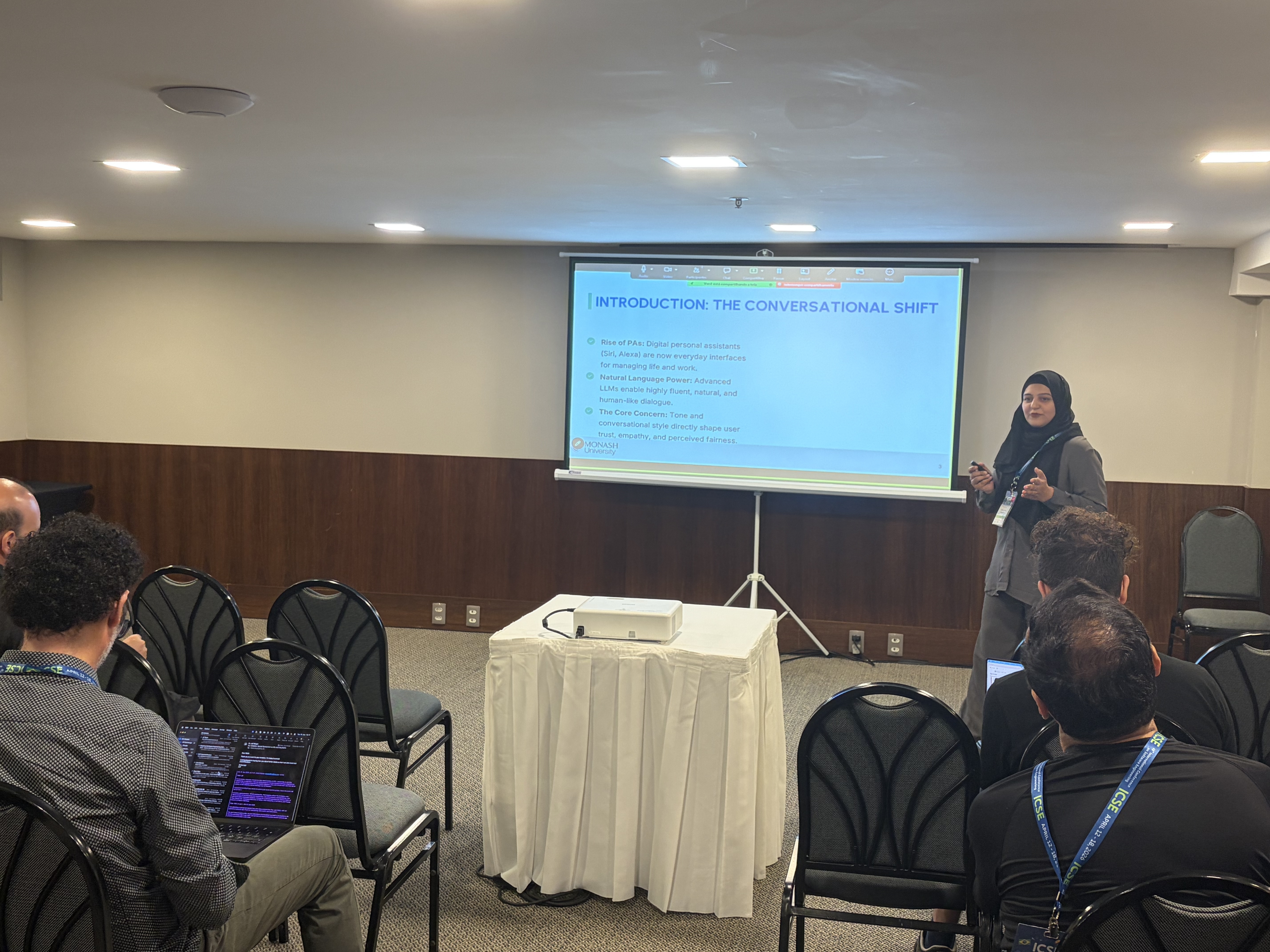
| 4 | 10:15 - 10:30 | Bias Beneath the Tone: Empirical Characterisation of Tone Bias in LLM-Driven UX Systems |
| 5 | 10:30 - 11:00 | Break |
| 6 | 11:00 - 11:15 | UX Requirements Engineering for COSE Platforms: A Cultural Perspective |
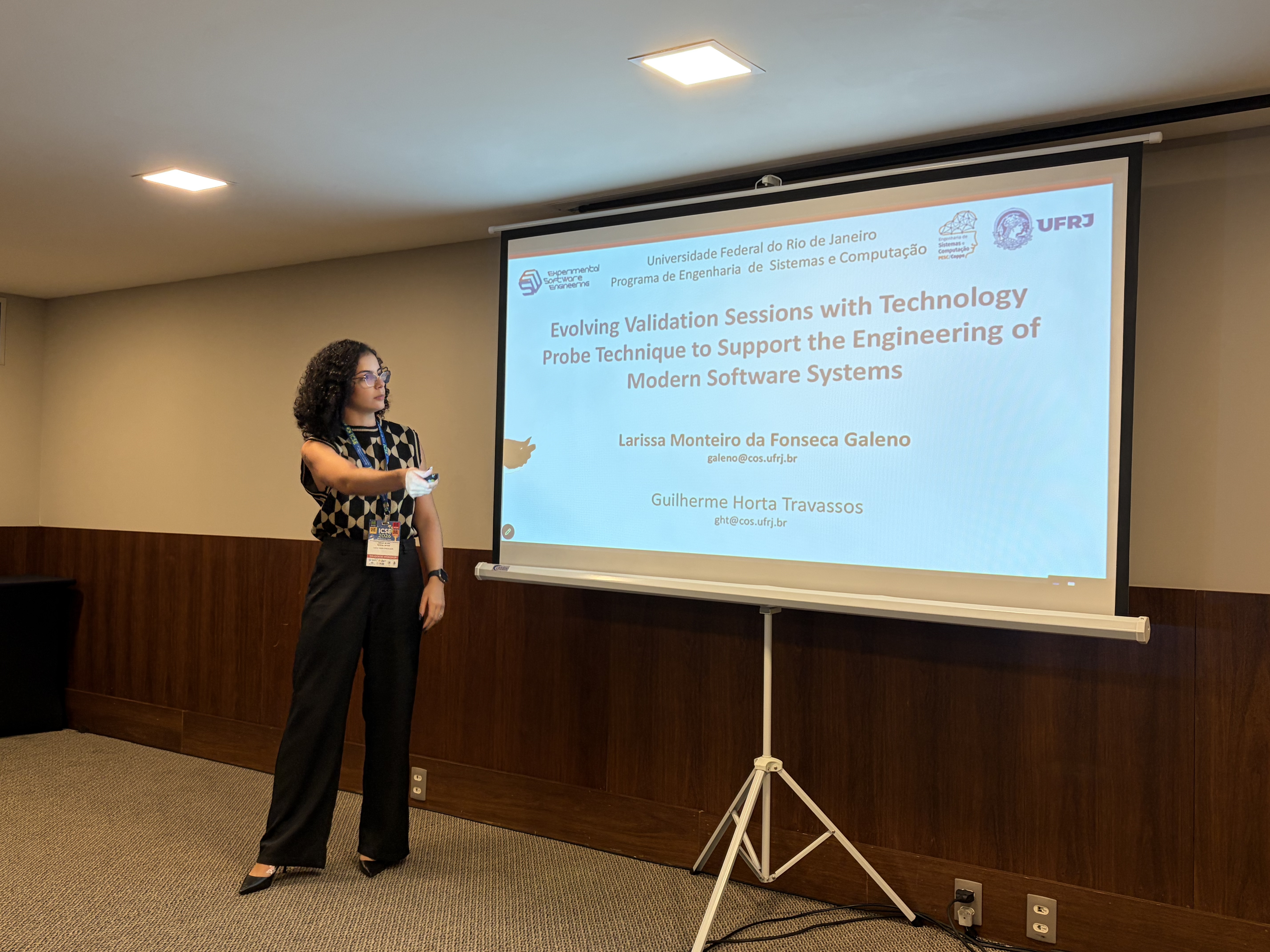
| 7 | 11:15 - 11:30 | Evolving Validation Sessions with Technology Probe Technique to Support the Engineering of Modern Software Systems |
| 8 | 11:30 - 11:45 | Designing an Accessible Blockly: An Extension-Based Accessibility Framework (EAF) for Structured Navigation and Editing |
| 9 | 11:45 - 12:00 | Virtual Avatars for Accessible Consumer Services: A Rapid Review of Design Patterns and Challenges |
| 10 | 12:00 - 12:15 | Co-design of an Accessible Avatar for Deaf Users: A Participatory Methodology in Practice |
| 11 | 12:30 - 14:00 | Lunch |
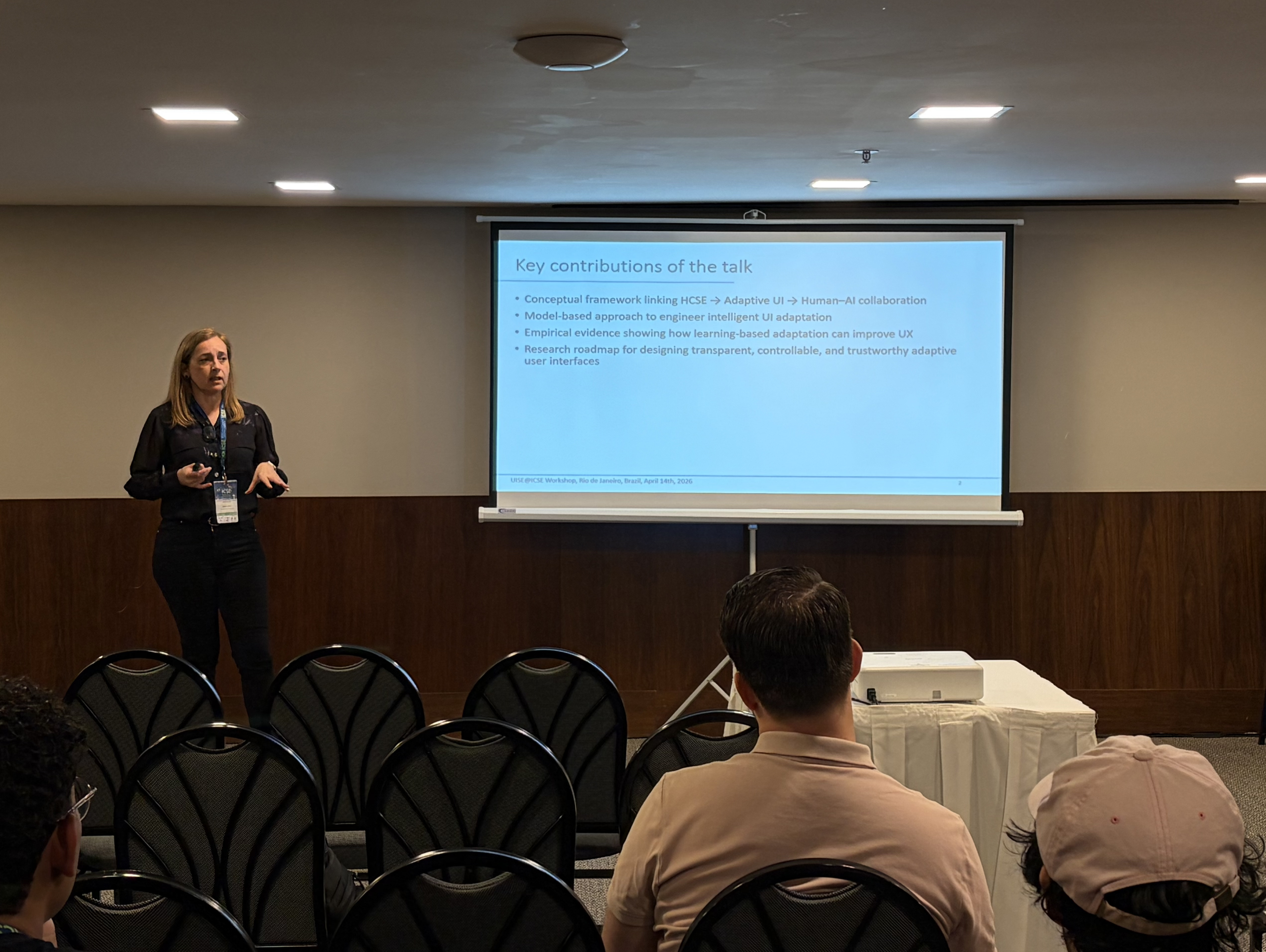
| 12 | 14:00 - 14:50 | Keynote Talk |
| Engineering Adaptive Systems that Learn from Human Interaction | ||
| Silvia Abrahão (Universitat Politècnica de València (UPV)) | ||
| 14 | 15:05 - 15:20 | PrivAuto: Practical Insights of On-Device Privacy-Preserving Agentic Systems for Mobile GUI Automation |
| 15 | 15:30 - 16:00 | Break |
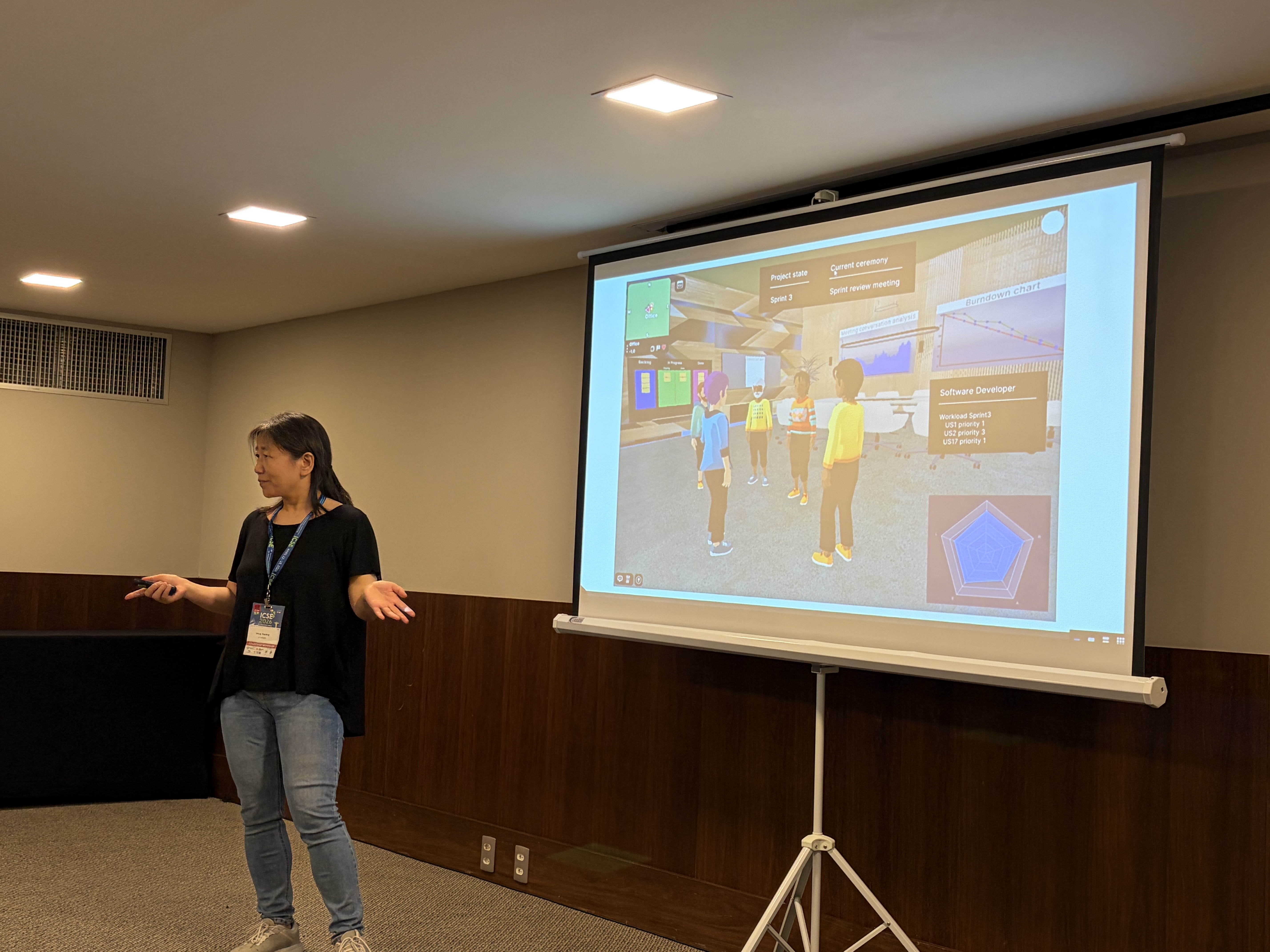
| 16 | 16:00 - 16:15 | Metaverse and blockchain based 3D-2D interfaces for improving agile teams communication |
| 17 | 16:15 - 16:30 | Immersion Without Instability: A Digital Twin Approach to Solve Imbalance Issues in Virtual Reality |
| 18 | 16:30 - 16:40 | Closing Remarks (Sidong Feng) |
Invited Keynote Speakers

Professor, Hasso Plattner Institute, Germany
On Generative Requirements Engineering and UX Design
Abstract
Software development projects often fail not due to technical issues, but rather because of misunderstood user needs and missing requirements. As the Turing Award Winner Fred Brooks famously said, "the hardest single part of building a software system is deciding precisely what to build." In this talk, I will reflect on how, in my research journey, I tried to tackle this hard challenge by leveraging data science and machine learning to make users, their experience, and their feedback a first-order concern in software engineering. I will also discuss how agentic and generative AI, which is currently reshaping software engineering, can be tightened to effectively address the requirements and design challenge, and conclude by highlighting pitfalls and new emerging issues.
BiographyDr. Maalej is a full professor of informatics, a passionate mentor, and an award-winning researcher. His interests include Agentic Software Engineering, Modern Requirements Engineering and Design, Responsible AI Engineering, as well as Psychology and Communication. His work has received four Most Influential Paper awards and played a pivotal role in establishing the field of data-driven requirements engineering and in widening the scope of mining software repositories to users and social media data. Maalej's work has inspired and been adopted by major software vendors such as SAP, Siemens, Google, and Microsoft. In addition to his research contributions, Maalej teaches software development to up to 700 students in a room using fun activities and pair-programming. He serves as a senior mentor in the tech-transfer and startup community and has led over 100 collaboration projects with industry.

Professor, Universitat Politècnica de València (UPV), Spain
Engineering Adaptive Systems that Learn from Human Interaction
Abstract
Understanding how software systems can continuously learn from human interaction has long been a central challenge in human-centered software engineering. In this talk, I reflect on my research journey investigating adaptive user interfaces capable of capturing contextual information, modeling user behavior, and improving interaction through machine learning techniques. I discuss how reinforcement learning approaches enable software systems to dynamically adapt user interfaces, supporting more effective and usable interaction experiences. I then consider how recent advances in artificial intelligence extend this vision by enabling new forms of human-AI collaboration in which software systems not only adapt to users but also actively support decision-making and creativity. I conclude by outlining open challenges for integrating user experience considerations into software engineering processes and for designing adaptive user interfaces that remain transparent, controllable, and aligned with human goals.
BiographySilvia Abrahão is a Full Professor of Software Engineering at the Universitat Politècnica de València (UPV), Spain, where she also serves as Director of the Master's Program in Software Systems Engineering. Her research focuses on human-centered software engineering, intelligent adaptation of user interfaces, model-driven engineering, and the empirical evaluation of software modeling approaches. She has led eighteen research projects and technology transfer contracts in collaboration with academic and industrial partners. She serves as Senior Associate Editor for ACM Transactions on Software Engineering and Methodology (TOSEM) and as Associate Editor and Department Editor for IEEE Software, where she is also Co-Editor of the Practitioner's Digest department. In addition, she is a member of the Editorial and Advisory Boards of the Journal of Software and Systems Modeling (SoSyM) and the Journal of Software: Practice and Experience (SPE). She is currently Chair of the ACM Women in Computing Rising Star Award Committee.
Accepted Papers
Organizing Committee
The Chinese University of Hong Kong, Shenzhen

University of Central Florida

University of Connecticut

University of California, Irvine
Technical University of Munich
Publicity Chair

Technical University of Munich
Program Committee
All names are sorted alphabetically by last name.